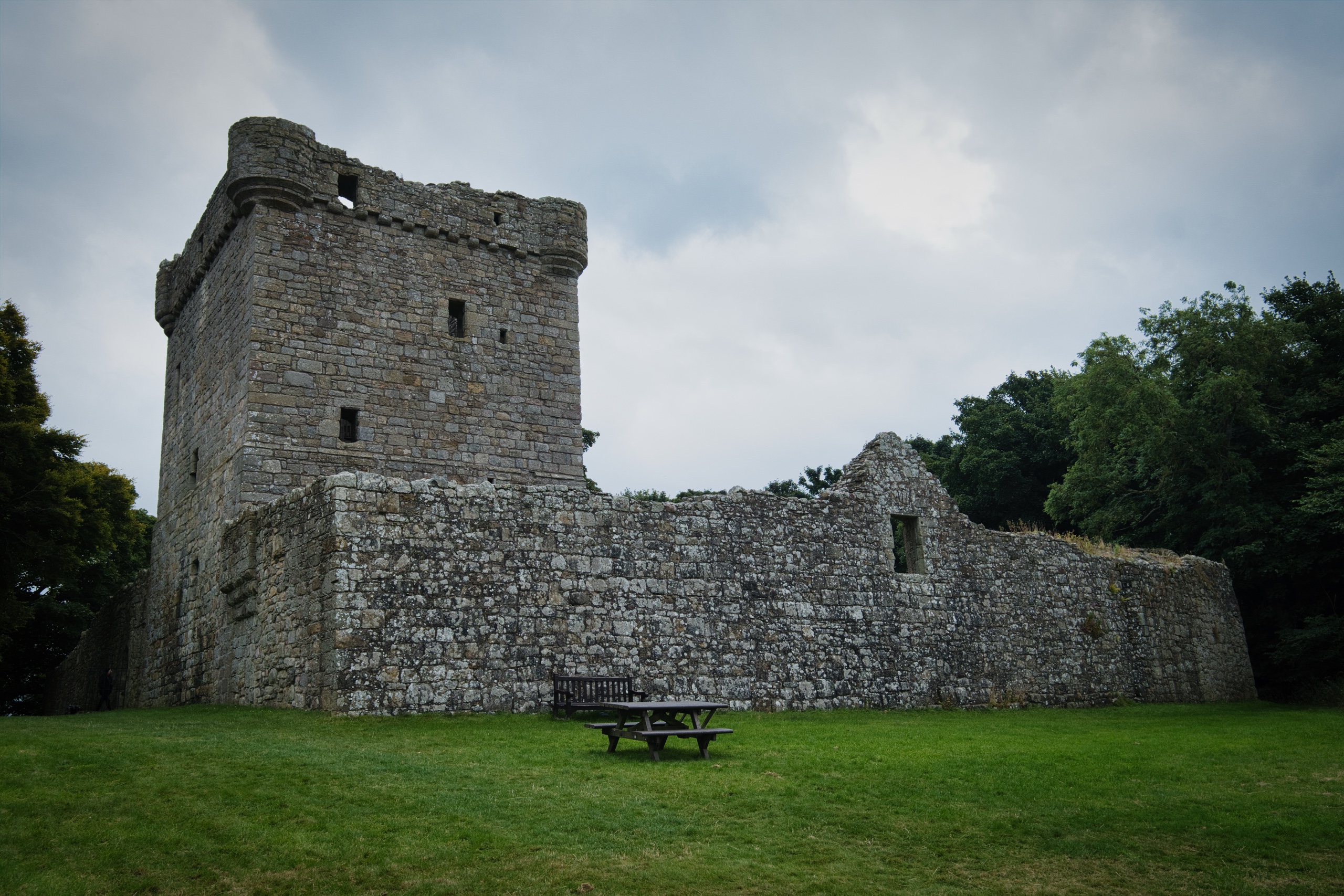
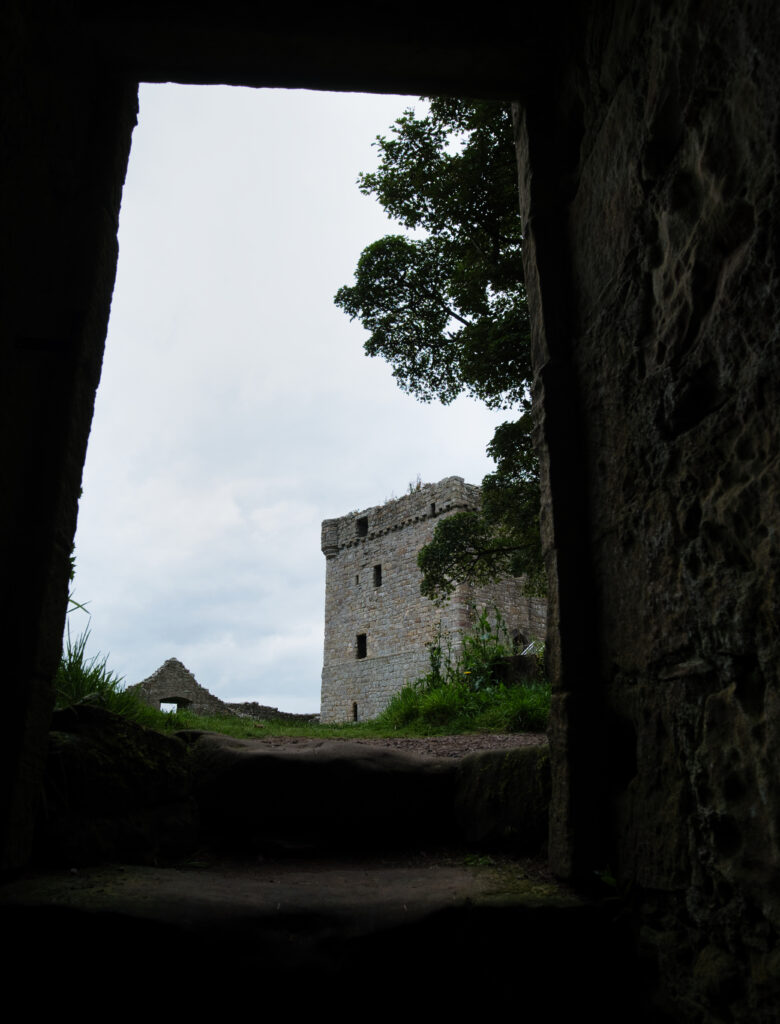
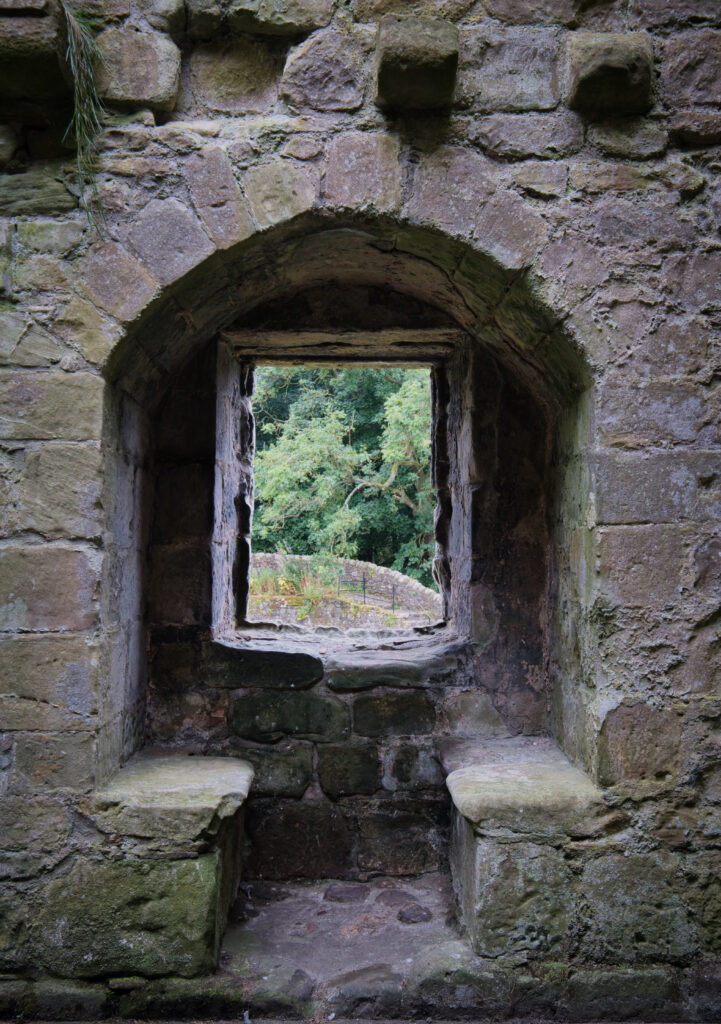
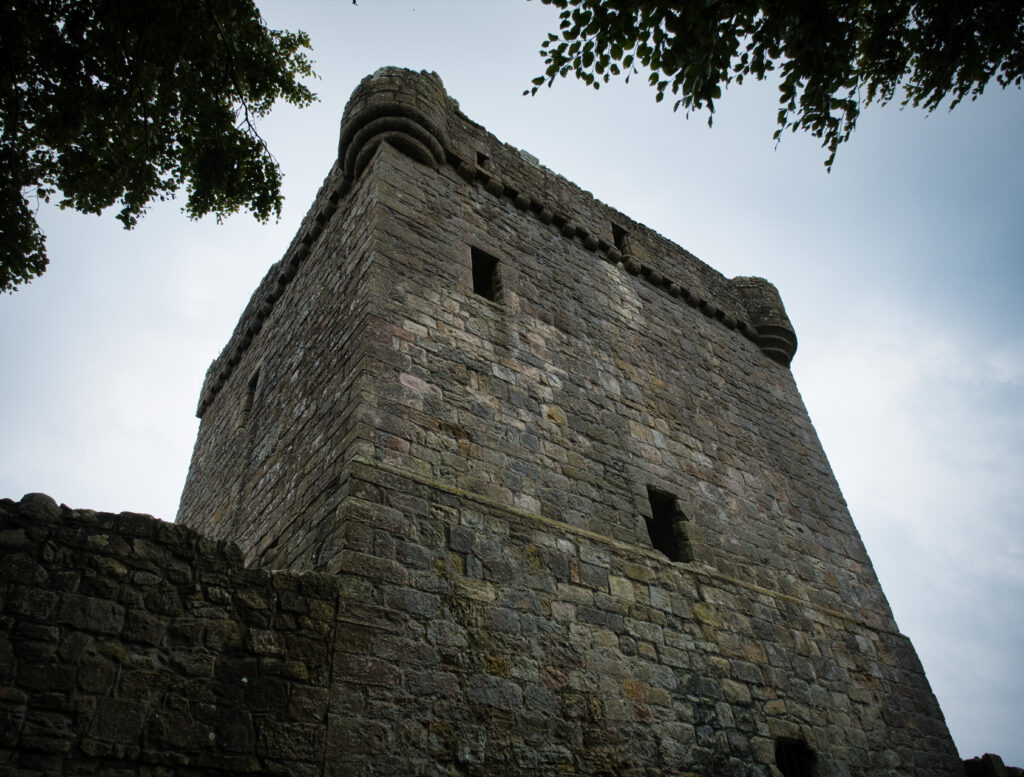
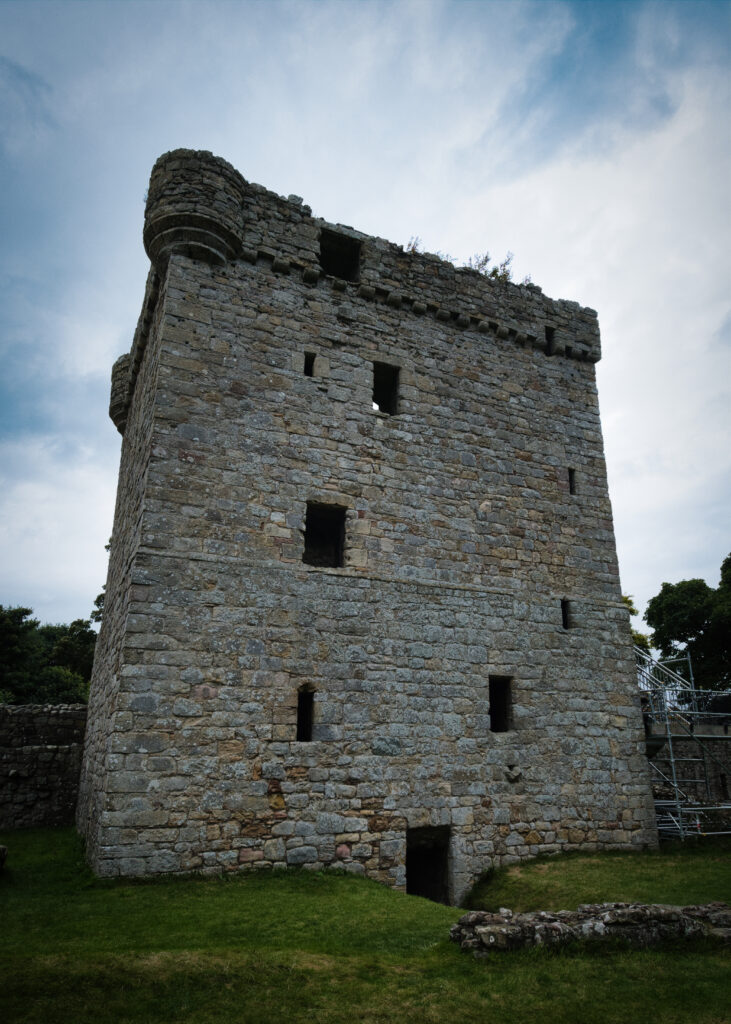
Lochleven Castle sits on a small island in the middle of Loch Leven in Kinross.
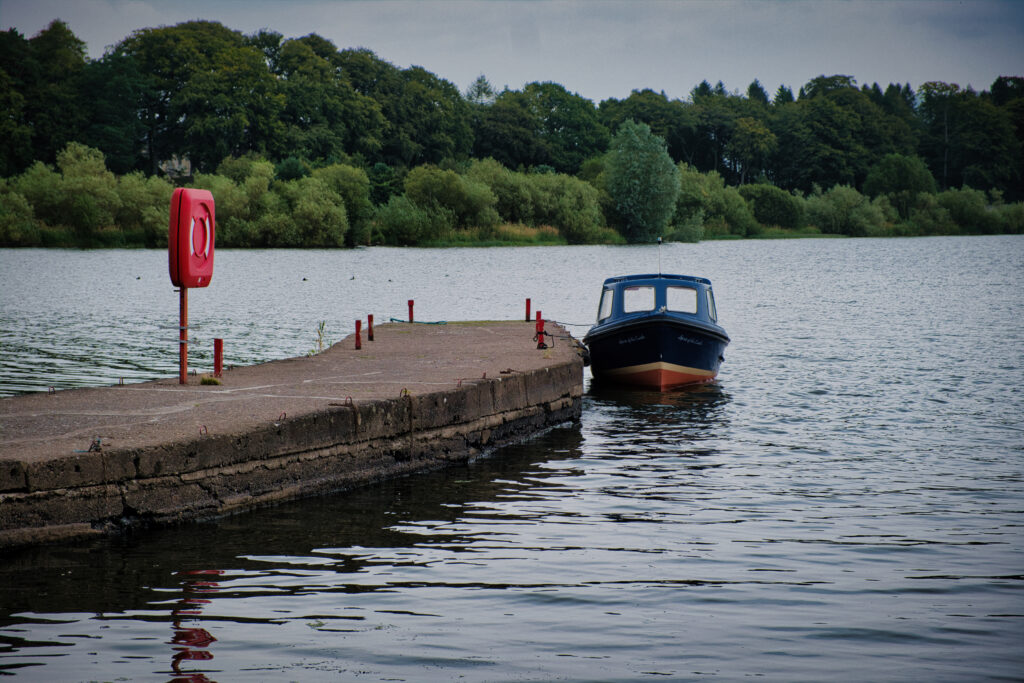
The castle is accessed via a small boat service from the jetty at Pier Road, Kinross. It is operated by Historic Environment Scotland.
The castle is thought to date back to as early as 1257. It held a strategic position between Edinburgh, Stirling and Perth.
During the First War of Scottish Independence the invading English army held the castle. It was recaptured by the Scots before the end of the 13th century, possibly by William Wallace.
King Robert the Bruce is known to have visited the castle in 1313 and 1323.
Robert Stewart was imprisoned here in 1369, two years before his coronation as Robert II.
In 1390, as king, he granted the castle to Sir Henry Douglas.
Beginning in the 14th century, the castle served as a state prison.
Mary, Queen of Scots stayed at Lochleven for a week in May 1562 to recover from a riding accident.
In September 1565, Mary visited Loch Leven again as the guest of Sir William Douglas.
Two years later, Mary returned to Lochleven as a prisoner, following the Battle of Carberry Hill. She was held there for eleven months.
Whilst imprisoned, she suffered a miscarriage of twins, and was compelled to abdicate her throne in favour of her infant son, James VI.
In May 1568, Mary escaped across the loch and fled to England in exile.
She never saw her native land again.
Around 1546, the Douglases built a house on the shore of the Loch which was known as “Newhouse”.
In 1675, the estate was bought by Sir William Bruce, royal architect in Scotland.
He built Kinross House to replace Newhouse, and the castle was no longer lived in.
Lochleven Castle had fallen into ruin by the 18th century.
It is advised to pre-book your visit to the castle, as spaces on the boat are limited. There is plenty of parking shoreside at Kinross.
More details can be found here.